Masala Dosa Recipe: Crispy, Easy & Delicious at Home
Introduction
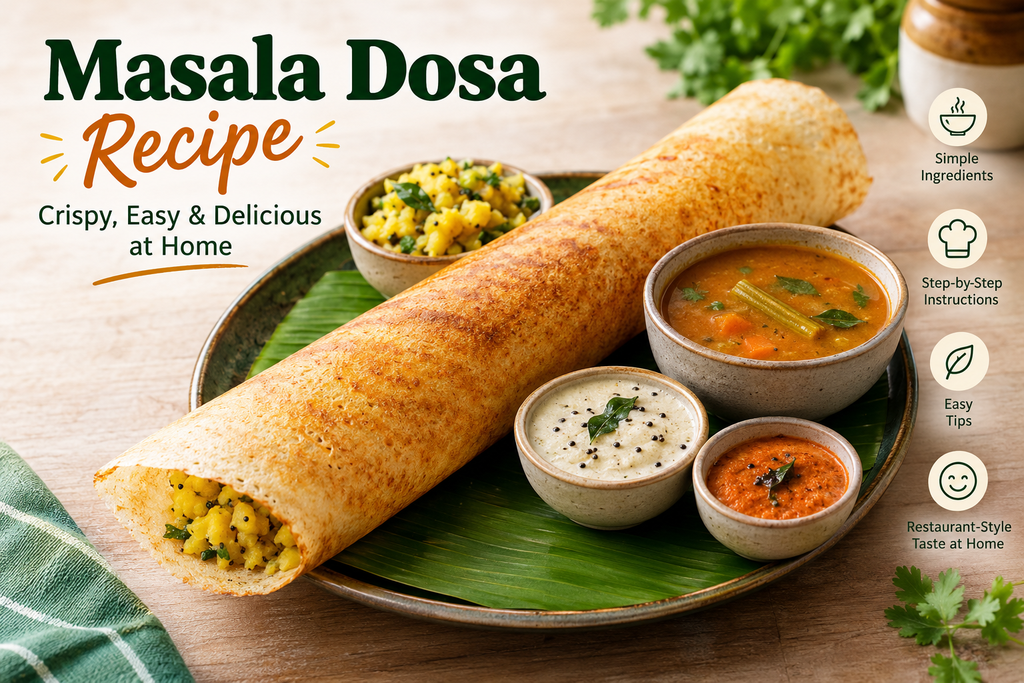
A masala dosa recipe is one of the most popular South Indian recipes, loved for its crispy texture, flavorful potato filling, and delicious combination of chutney and sambar. Although masala dosa is a restaurant favorite, you can make a delicious version at home with a few simple ingredients and the right cooking technique.
The secret to a good dosa is a well-fermented batter. The batter should spread easily on a hot pan and become thin and crispy as it cooks. The potato masala adds a savory, mildly spiced filling that makes the dosa satisfying enough for breakfast, brunch, lunch, or dinner.
If you have been wondering how to make masala dosa at home, this easy recipe will guide you through preparing the batter, making the potato filling, cooking the dosa, and serving it the traditional way.
What Is Masala Dosa?
Masala dosa is a South Indian dish made from a fermented batter of rice and lentils. The batter is spread into a thin layer on a hot skillet or dosa pan and cooked until crisp. It is then filled with a spiced potato mixture and folded before serving.
A traditional South Indian dosa recipe often uses rice and urad dal as the main ingredients. Fermentation gives the batter a slightly tangy flavor and helps create the characteristic texture of the dosa.
The most popular version is masala dosa, which combines the crispy dosa with a warm potato masala for dosa.
Ingredients for Masala Dosa
For this easy masala dosa recipe, you will need ingredients for both the dosa batter and the potato filling.
Ingredients for the Dosa Batter
- 2 cups rice
- ½ cup urad dal
- 1 teaspoon fenugreek seeds
- Salt to taste
- Water as needed
- Oil or ghee for cooking
Ingredients for the Potato Masala
- 4 medium potatoes
- 1 medium onion, thinly sliced
- 1–2 green chilies, chopped
- 1 teaspoon mustard seeds
- ½ teaspoon cumin seeds
- A pinch of asafoetida
- 8–10 curry leaves
- ½ teaspoon turmeric powder
- 1 tablespoon oil
- Salt to taste
- Fresh coriander leaves
- A small piece of ginger, finely chopped
How to Make Masala Dosa Batter
The batter is the foundation of a crispy masala dosa. Proper soaking, grinding, and fermentation are important for achieving good results.
Soak the Rice and Urad Dal
Wash the rice and urad dal separately until the water becomes relatively clear. Soak them in enough water for about 4–6 hours. Add the fenugreek seeds to the urad dal while soaking.
After soaking, drain the ingredients.
Grind the Ingredients
Grind the urad dal with a little water until smooth and fluffy. Grind the rice separately until you get a slightly grainy but smooth consistency.
Combine both mixtures in a large bowl and add enough water to create a thick but pourable batter.
Ferment the Batter
Cover the bowl and allow the batter to ferment in a warm place for approximately 8–12 hours, depending on the temperature.
Once fermented, the batter should look slightly bubbly and have increased in volume. Add salt and gently mix before making the dosa.
Why Is Fermentation Important?
Fermentation improves the flavor and texture of the dosa. It also helps the batter spread more easily and contributes to a light, crisp result.
For the best masala dosa batter recipe, avoid making the batter excessively thin before fermentation. You can adjust the consistency with water after fermentation.
How to Make the Potato Masala
The potato filling is what transforms a regular dosa into a flavorful masala dosa.
Prepare the Potatoes
Boil the potatoes until they are tender. Allow them to cool slightly, peel them, and break them into small pieces or roughly mash them.
Heat oil in a pan over medium heat. Add mustard seeds and allow them to splutter.
Add cumin seeds, asafoetida, curry leaves, ginger, and green chilies. Stir for a few seconds.
Add the sliced onions and cook until they become soft.
Add turmeric powder and salt. Mix well.
Finally, add the cooked potatoes and gently combine everything. Cook for a few minutes so the flavors come together.
Finish with fresh coriander leaves.
How to Cook Crispy Masala Dosa
Now that your batter and potato filling are ready, it is time to make the dosa.
Heat the Dosa Pan
Place a dosa pan or flat skillet over medium-high heat. The pan should be hot enough for the batter to spread and cook properly, but not so hot that the batter immediately sticks or becomes difficult to spread.
If necessary, lightly grease the pan.
Spread the Dosa Batter
Pour a ladleful of batter into the center of the hot pan.
Using the back of the ladle, spread the batter in circular motions from the center toward the edges. Try to make the dosa thin and even.
Drizzle a small amount of oil or ghee around the edges and over the surface.
Add the Potato Filling
Allow the dosa to cook until the bottom becomes golden and crisp. Place a portion of the potato masala in the center.
Fold the dosa in half or roll it into your preferred shape.
Serve immediately while it is hot and crispy.
Tips for Making the Best Masala Dosa
Making a restaurant-style masala dosa recipe at home becomes easier when you follow a few simple tips.
Use Properly Fermented Batter
Under-fermented batter may produce dense or pale dosas. Give the batter enough time to ferment according to your kitchen temperature.
Get the Batter Consistency Right
The batter should be pourable but not watery. If it is too thick, the dosa may be difficult to spread. If it is too thin, it may not hold its shape properly.
Control the Pan Temperature
A very hot pan can make the batter difficult to spread. If the pan becomes too hot, reduce the heat briefly before adding more batter.
Spread the Batter Quickly
Pour the batter onto the pan and spread it immediately. A quick circular motion helps create a thin and even dosa.
Serve Immediately
A crispy masala dosa tastes best when served straight from the pan. If you leave it for too long, it may lose some of its crispness.
What to Serve With Masala Dosa
A homemade masala dosa is traditionally served with several flavorful accompaniments.
Coconut Chutney
Coconut chutney provides a creamy, mildly spicy contrast to the crispy dosa. It is one of the most popular accompaniments for dosa.
Sambar
Sambar adds a warm, tangy, and savory element to the meal. Dip pieces of dosa into sambar for a classic South Indian combination.
Tomato Chutney
For a slightly tangy and spicy alternative, tomato chutney pairs wonderfully with dosa.
Other Chutneys
You can also serve dosa with peanut chutney, mint chutney, coriander chutney, or onion chutney depending on your preference.
Common Mistakes to Avoid
Even a simple dosa recipe at home can go wrong if a few basic steps are overlooked.
Using an Overly Thick Batter
A thick batter makes it difficult to create a thin, crispy dosa. Add a little water and mix well if needed.
Cooking on an Extremely Hot Pan
Excessive heat can cause the batter to cook before you have enough time to spread it evenly.
Using Too Much Oil
A small amount of oil is usually enough. Too much oil can make the dosa greasy instead of pleasantly crisp.
Skipping Fermentation
Fermentation is important for traditional dosa batter. If you skip it, the flavor and texture may not be the same.
Can You Make Masala Dosa Without Fermentation?
Yes, there are instant masala dosa recipes that use alternative ingredients and techniques to create a quick version. However, traditional rice-and-urad-dal dosa generally benefits from fermentation.
If you want authentic flavor and texture, planning ahead and allowing the batter to ferment is usually worth the extra time.
Frequently Asked Questions About Masala Dosa
What Rice Is Best for Masala Dosa?
Regular dosa rice or suitable short- or medium-grain rice can be used. The choice of rice can affect the final texture, so experimenting with locally available varieties can help you find your preferred result.
How Long Should Dosa Batter Ferment?
Dosa batter commonly takes around 8–12 hours to ferment, although the exact time depends on room temperature and other conditions.
Why Is My Dosa Not Crispy?
Your dosa may not become crispy if the batter is too thick, the pan temperature is incorrect, or the dosa is not cooked long enough. Proper fermentation and batter consistency also matter.
Can I Store Dosa Batter?
Yes. Properly prepared dosa batter can be refrigerated after fermentation. Keep it covered and use a clean utensil when taking batter from the container.
Can I Make Masala Dosa Without a Traditional Dosa Pan?
Yes. A flat non-stick or well-seasoned skillet can also be used. The important thing is to use a suitable flat cooking surface that allows you to spread the batter thinly.
Conclusion
Learning how to make masala dosa at home is easier once you understand the importance of properly prepared batter, fermentation, pan temperature, and spreading technique. The combination of a thin, crispy dosa with flavorful potato masala makes this dish a delicious choice for breakfast, brunch, or any time you want a satisfying South Indian meal.
With homemade coconut chutney and hot sambar on the side, this masala dosa recipe becomes a complete and flavorful meal. Once you master the basic technique, you can experiment with different fillings, chutneys, and dosa variations to create your own favorite version.